Domain bspl.de kaufen?
Wir ziehen mit dem Projekt
bspl.de um.
Sind Sie am Kauf der Domain
bspl.de interessiert?
domain@kv-gmbh.de · 0541-91531010
Domain bspl.de kaufen?
Can someone explain to me how to find the best offers for cheap flights?
You can find the best offers for cheap flights by using comparison websites, signing up for alerts from airlines, and being flexible with your travel dates and destinations. It's also helpful to book in advance and consider flying during off-peak times to save money. Additionally, consider using loyalty programs or credit card points to help reduce the cost of your flights. **
Was ist der Unterschied zwischen "explain" und "describe"?
"Explain" bedeutet, etwas zu erklären oder zu erläutern, indem man die Gründe, Zusammenhänge oder Funktionsweisen erklärt. "Describe" hingegen bedeutet, etwas zu beschreiben oder zu schildern, indem man die Eigenschaften, Merkmale oder äußeren Erscheinungen darstellt. Während "explain" den Fokus auf das Verständnis legt, konzentriert sich "describe" eher auf die visuelle oder verbale Darstellung. **


Ähnliche Suchbegriffe für Unwilling-To-Explain
Top-Angebote
Produkte zum Begriff Unwilling-To-Explain:
-
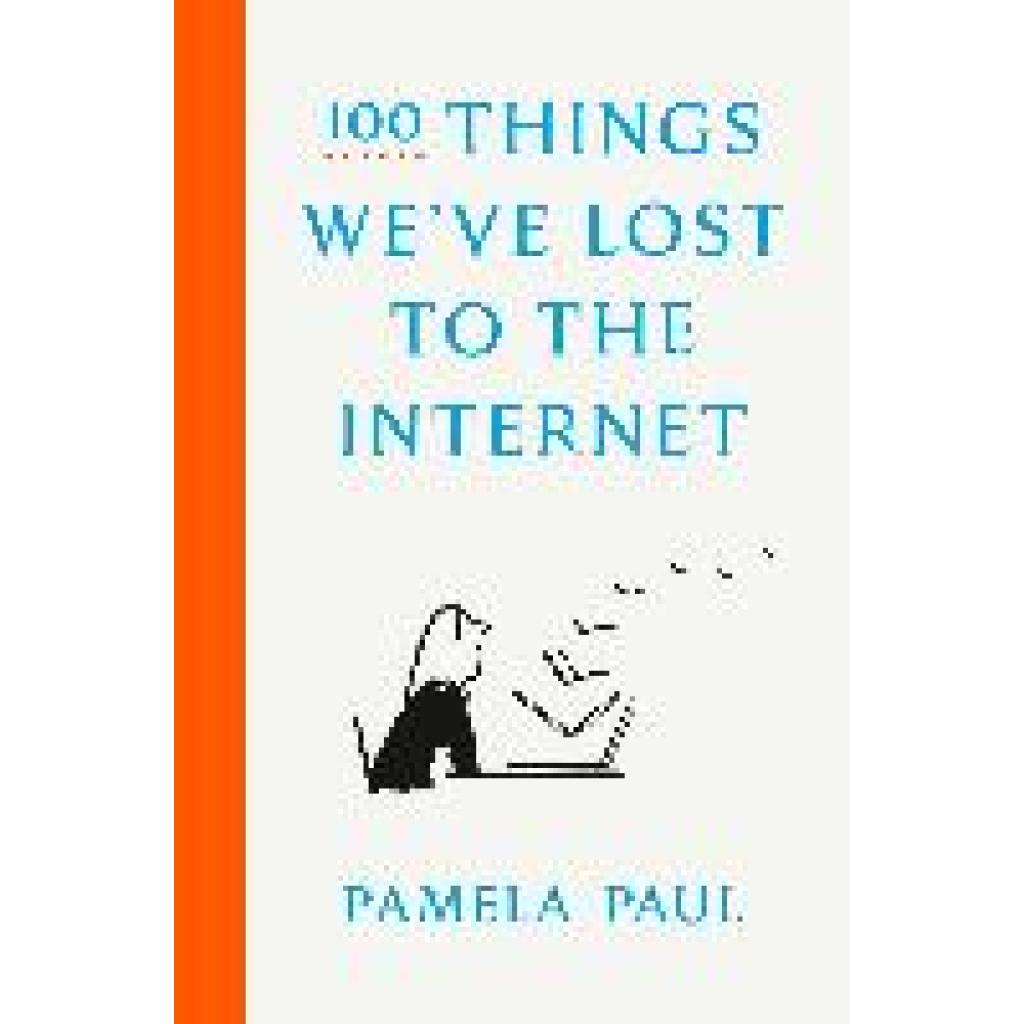
Paul, Pamela: 100 Things We've Lost to the Internet100 Things We've Lost to the Internet , "The acclaimed editor of The New York Times Book Review takes readers on a nostalgic tour of the pre-Internet age, offering powerful insights into both the profound and the seemingly trivial things we've lost. Remember all those ingrained habits, cherished ideas, beloved objects, and stubborn preferences from the pre-Internet age? They're gone. To some of those things we can say good riddance. But many we miss terribly. Whatever our emotional response to this departed realm, we are faced with the fact that nearly every aspect of modern life now takes place in filtered, isolated corners of cyberspace-a space that has slowly subsumed our physical habitats, replacing or transforming the office, our local library, a favorite bar, the movie theater, and the coffee shop where people met one another's gaze from across the room. Even as we've gained the ability to gather without leaving our house, many of the fundamentally human experiences that have sustained us have disappeared. In one hundred glimpses of that pre-Internet world, Pamela Paul, editor of The New York Times Book Review, presents a captivating record, enlivened with illustrations, of the world before cyberspace-from voicemails to blind dates to punctuation to civility. There are the small losses: postcards, the blessings of an adolescence largely spared of documentation, the Rolodex, and the genuine surprises at high school reunions. But there are larger repercussions, too: weaker memories, the inability to entertain oneself, and the utter demolition of privacy. 100 Things We've Lost to the Internet is at once an evocative swan song for a disappearing era and, perhaps, a guide to reclaiming just a little bit more of the world IRL"-- , > , Erscheinungsjahr: 20211026, Produktform: Leinen, Autoren: Paul, Pamela, Abbildungen: LINE DRAWINGS T/O, Themenüberschrift: SOCIAL SCIENCE / Popular Culture, Keyword: social;anthropology;psychology;social media;humor;white elephant gifts;funny gifts;pop culture gifts;swan song;100 things;modern history;cursive handwriting;cursive;rolodex card holder;internet password book;myspace;history;privacy;cultural studies;rolodex;lost;funny books;sociology books;society;new york times;cultural history;cyberspace;social science;culture;21st century;sociology;millennial;pop culture;evolution;tablets;computers;internet;internet of things;comedy;history books;meme, Fachschema: Amerikanische Belletristik / Essay, Feuilleton, Reportage~Englische Bücher / Belletristik / Essay~Internet / Politik, Gesellschaft~Populärkultur~Trivialkultur~Soziologie~Comedy, Fachkategorie: Soziologie~Internet und digitale Medien: Kunst und Performance~Humor im Fernsehen, TV-Comedys, Imprint-Titels: Crown Books, Warengruppe: HC/Belletristik/Lyrik/Dramatik/Essays, UNSPSC: 49019900, Warenverzeichnis für die Außenhandelsstatistik: 49019900, Länge: 218, Breite: 151, Höhe: 27, Gewicht: 402, Produktform: Gebunden, Genre: Importe,22,59 €*Versand: 0,00 €Sichere Weiterleitung zum Anbieter


-
Was sind die verschiedenen Grade oder Stufen, die in einem bestimmten Bereich oder Prozess existieren? Can you explain the concept of gradation and how it applies to different situations?
Gradation bezieht sich auf die verschiedenen Stufen oder Grade, die in einem bestimmten Bereich oder Prozess existieren. Diese können sich auf Intensität, Größe, Komplexität oder andere Eigenschaften beziehen. Gradation wird verwendet, um Unterschiede und Fortschritte innerhalb eines Kontexts zu verdeutlichen. **
-
Warum nutzen viele illegale Seiten die .to-Domain?
Viele illegale Seiten nutzen die .to-Domain, da sie ursprünglich für das Königreich Tonga bestimmt war, aber auch von anderen Ländern genutzt wird. Dadurch können sie ihre tatsächliche geografische Herkunft verschleiern und es schwieriger machen, sie zu verfolgen oder zu blockieren. Außerdem ist die .to-Domain relativ günstig und einfach zu registrieren, was sie attraktiv für illegale Aktivitäten macht. **
-
Kannst du mir bitte helfen, den Unterschied zwischen "describe" und "explain" zu erkennen?
"Describe" bedeutet, etwas in Worten zu beschreiben oder zu erzählen, um ein Bild oder eine Vorstellung davon zu vermitteln. "Explain" hingegen bedeutet, etwas genauer zu erklären, indem man Ursachen, Gründe oder Zusammenhänge aufzeigt. Während "describe" sich auf das Darstellen von Eigenschaften oder Merkmalen konzentriert, geht es bei "explain" um das Verständnis der Funktionsweise oder des Hintergrunds einer Sache. **
-
Wann benutzt man im Englischen 'to be supposed to' und wann 'to be expected to'?
Im Englischen benutzt man "to be supposed to", um auszudrücken, was von jemandem erwartet wird oder was er tun sollte, basierend auf Regeln, Vereinbarungen oder Erwartungen. "To be expected to" wird verwendet, um auszudrücken, was wahrscheinlich oder erwartet wird, dass jemand tut, basierend auf der Situation oder den Umständen. Beide Ausdrücke beziehen sich auf Erwartungen, aber "to be supposed to" bezieht sich mehr auf externe Regeln oder Vereinbarungen, während "to be expected to" sich auf allgemeine Erwartungen oder Vorhersagen bezieht. **

Can you explain how a spray burst works and what its potential applications are?
A spray burst works by releasing a burst of liquid or gas in a controlled manner through a nozzle or valve. It is commonly used in industries such as agriculture for pesticide application, in firefighting for extinguishing fires, and in personal care products for dispensing perfumes or cleaning solutions. The potential applications of spray bursts are vast and can range from medical devices for drug delivery to industrial processes for coating surfaces. **
Wie bildet man das Present Progressive bei "to be able to" und "to be allowed to"?
Um das Present Progressive bei "to be able to" zu bilden, verwendet man die entsprechende Form von "to be" (am, is, are) im Present Progressive und fügt dann "able to" hinzu. Zum Beispiel: "I am able to swim" oder "She is able to speak French". Bei "to be allowed to" bildet man das Present Progressive ebenfalls mit der entsprechenden Form von "to be" (am, is, are) im Present Progressive und fügt dann "allowed to" hinzu. Zum Beispiel: "We are allowed to park here" oder "He is allowed to stay out late". **
Top-Angebote
Produkte zum Begriff Unwilling-To-Explain:
-
Paul, Pamela: 100 Things We've Lost to the Internet100 Things We've Lost to the Internet , "The acclaimed editor of The New York Times Book Review takes readers on a nostalgic tour of the pre-Internet age, offering powerful insights into both the profound and the seemingly trivial things we've lost. Remember all those ingrained habits, cherished ideas, beloved objects, and stubborn preferences from the pre-Internet age? They're gone. To some of those things we can say good riddance. But many we miss terribly. Whatever our emotional response to this departed realm, we are faced with the fact that nearly every aspect of modern life now takes place in filtered, isolated corners of cyberspace-a space that has slowly subsumed our physical habitats, replacing or transforming the office, our local library, a favorite bar, the movie theater, and the coffee shop where people met one another's gaze from across the room. Even as we've gained the ability to gather without leaving our house, many of the fundamentally human experiences that have sustained us have disappeared. In one hundred glimpses of that pre-Internet world, Pamela Paul, editor of The New York Times Book Review, presents a captivating record, enlivened with illustrations, of the world before cyberspace-from voicemails to blind dates to punctuation to civility. There are the small losses: postcards, the blessings of an adolescence largely spared of documentation, the Rolodex, and the genuine surprises at high school reunions. But there are larger repercussions, too: weaker memories, the inability to entertain oneself, and the utter demolition of privacy. 100 Things We've Lost to the Internet is at once an evocative swan song for a disappearing era and, perhaps, a guide to reclaiming just a little bit more of the world IRL"-- , > , Erscheinungsjahr: 20211026, Produktform: Leinen, Autoren: Paul, Pamela, Abbildungen: LINE DRAWINGS T/O, Themenüberschrift: SOCIAL SCIENCE / Popular Culture, Keyword: social;anthropology;psychology;social media;humor;white elephant gifts;funny gifts;pop culture gifts;swan song;100 things;modern history;cursive handwriting;cursive;rolodex card holder;internet password book;myspace;history;privacy;cultural studies;rolodex;lost;funny books;sociology books;society;new york times;cultural history;cyberspace;social science;culture;21st century;sociology;millennial;pop culture;evolution;tablets;computers;internet;internet of things;comedy;history books;meme, Fachschema: Amerikanische Belletristik / Essay, Feuilleton, Reportage~Englische Bücher / Belletristik / Essay~Internet / Politik, Gesellschaft~Populärkultur~Trivialkultur~Soziologie~Comedy, Fachkategorie: Soziologie~Internet und digitale Medien: Kunst und Performance~Humor im Fernsehen, TV-Comedys, Imprint-Titels: Crown Books, Warengruppe: HC/Belletristik/Lyrik/Dramatik/Essays, UNSPSC: 49019900, Warenverzeichnis für die Außenhandelsstatistik: 49019900, Länge: 218, Breite: 151, Höhe: 27, Gewicht: 402, Produktform: Gebunden, Genre: Importe,22,59 €*Versand: 0,00 €Sichere Weiterleitung zum Anbieter
-
Can someone explain to me how to find the best offers for cheap flights?
You can find the best offers for cheap flights by using comparison websites, signing up for alerts from airlines, and being flexible with your travel dates and destinations. It's also helpful to book in advance and consider flying during off-peak times to save money. Additionally, consider using loyalty programs or credit card points to help reduce the cost of your flights. **
-
Was ist der Unterschied zwischen "explain" und "describe"?
"Explain" bedeutet, etwas zu erklären oder zu erläutern, indem man die Gründe, Zusammenhänge oder Funktionsweisen erklärt. "Describe" hingegen bedeutet, etwas zu beschreiben oder zu schildern, indem man die Eigenschaften, Merkmale oder äußeren Erscheinungen darstellt. Während "explain" den Fokus auf das Verständnis legt, konzentriert sich "describe" eher auf die visuelle oder verbale Darstellung. **
-
Was sind die verschiedenen Grade oder Stufen, die in einem bestimmten Bereich oder Prozess existieren? Can you explain the concept of gradation and how it applies to different situations?
Gradation bezieht sich auf die verschiedenen Stufen oder Grade, die in einem bestimmten Bereich oder Prozess existieren. Diese können sich auf Intensität, Größe, Komplexität oder andere Eigenschaften beziehen. Gradation wird verwendet, um Unterschiede und Fortschritte innerhalb eines Kontexts zu verdeutlichen. **
-
Warum nutzen viele illegale Seiten die .to-Domain?
Viele illegale Seiten nutzen die .to-Domain, da sie ursprünglich für das Königreich Tonga bestimmt war, aber auch von anderen Ländern genutzt wird. Dadurch können sie ihre tatsächliche geografische Herkunft verschleiern und es schwieriger machen, sie zu verfolgen oder zu blockieren. Außerdem ist die .to-Domain relativ günstig und einfach zu registrieren, was sie attraktiv für illegale Aktivitäten macht. **
Ähnliche Suchbegriffe für Unwilling-To-Explain
-
Kannst du mir bitte helfen, den Unterschied zwischen "describe" und "explain" zu erkennen?
"Describe" bedeutet, etwas in Worten zu beschreiben oder zu erzählen, um ein Bild oder eine Vorstellung davon zu vermitteln. "Explain" hingegen bedeutet, etwas genauer zu erklären, indem man Ursachen, Gründe oder Zusammenhänge aufzeigt. Während "describe" sich auf das Darstellen von Eigenschaften oder Merkmalen konzentriert, geht es bei "explain" um das Verständnis der Funktionsweise oder des Hintergrunds einer Sache. **
-
Wann benutzt man im Englischen 'to be supposed to' und wann 'to be expected to'?
Im Englischen benutzt man "to be supposed to", um auszudrücken, was von jemandem erwartet wird oder was er tun sollte, basierend auf Regeln, Vereinbarungen oder Erwartungen. "To be expected to" wird verwendet, um auszudrücken, was wahrscheinlich oder erwartet wird, dass jemand tut, basierend auf der Situation oder den Umständen. Beide Ausdrücke beziehen sich auf Erwartungen, aber "to be supposed to" bezieht sich mehr auf externe Regeln oder Vereinbarungen, während "to be expected to" sich auf allgemeine Erwartungen oder Vorhersagen bezieht. **
-
Can you explain how a spray burst works and what its potential applications are?
A spray burst works by releasing a burst of liquid or gas in a controlled manner through a nozzle or valve. It is commonly used in industries such as agriculture for pesticide application, in firefighting for extinguishing fires, and in personal care products for dispensing perfumes or cleaning solutions. The potential applications of spray bursts are vast and can range from medical devices for drug delivery to industrial processes for coating surfaces. **
-
Wie bildet man das Present Progressive bei "to be able to" und "to be allowed to"?
Um das Present Progressive bei "to be able to" zu bilden, verwendet man die entsprechende Form von "to be" (am, is, are) im Present Progressive und fügt dann "able to" hinzu. Zum Beispiel: "I am able to swim" oder "She is able to speak French". Bei "to be allowed to" bildet man das Present Progressive ebenfalls mit der entsprechenden Form von "to be" (am, is, are) im Present Progressive und fügt dann "allowed to" hinzu. Zum Beispiel: "We are allowed to park here" oder "He is allowed to stay out late". **
* Alle Preise verstehen sich inklusive der gesetzlichen Mehrwertsteuer und ggf. zuzüglich Versandkosten. Die Angebotsinformationen basieren auf den Angaben des jeweiligen Shops und werden über automatisierte Prozesse aktualisiert. Eine Aktualisierung in Echtzeit findet nicht statt, so dass es im Einzelfall zu Abweichungen kommen kann. ** Hinweis: Teile dieses Inhalts wurden von KI erstellt.